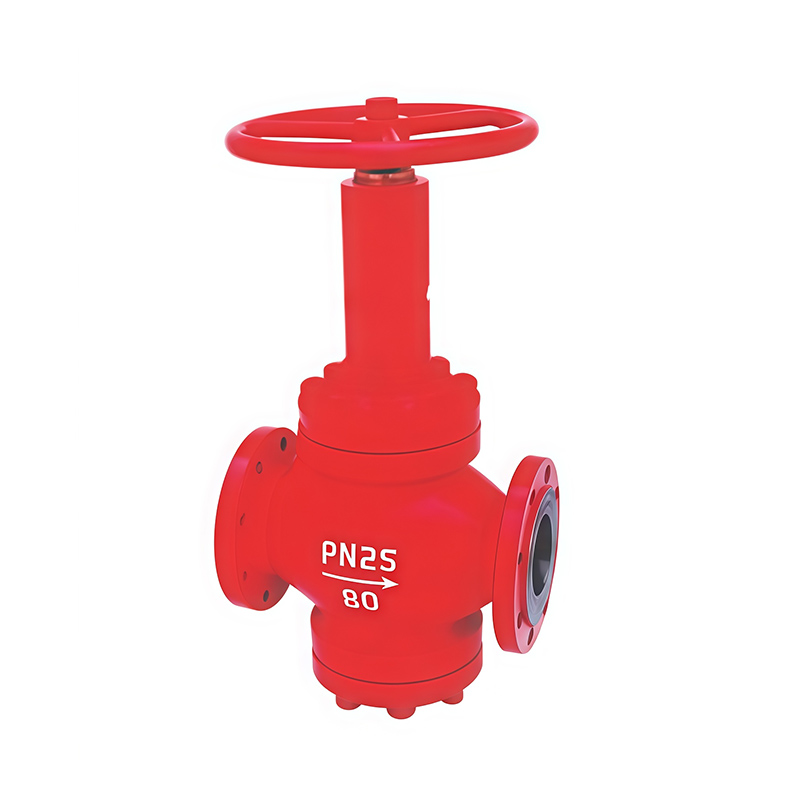
Throttling Shut-off and Vent Valve
Get In Touch →Throttle Stop Blowdown Valve
Design Features of Throttle Stop Blowdown Valve
Throttle stop blowdown valves are widely used as partial closing equipment on pipelines for petroleum, natural gas, coal gas, liquefied petroleum gas, oil refining, airports, chemical industry, oil & gas storage and transportation and other industries.
Product Description
Basic Model: FJ41Y Pressure Class: PN6–160 Nominal Diameter Range: DN25–250 Applicable Temperature: Standard type -29 ~ 121℃; Type G -29 ~ 250℃; Type D -45 ~ 121℃ Applicable Media: Standard type for petroleum and natural gas; Sulfur-resistant type for corrosive media containing H₂S and CO₂ Actuation: Handwheel, Gear, Pneumatic, Electric, Hydraulic
Design Specifications
Design Standard: GB/T 12235
Face-to-Face Standard: GB/T 12221
Flange Connection: GB/T 9113, JB/T 79.1, HG/T 20592
Welded End Connection: GB/T 12224
Test Standard: GB/T 26480, GB/T 13927
- This valve is a new integrated product for throttling, shut-off and blowdown. It adopts cage labyrinth throttling to realize multi-stage throttling, featuring remarkable throttling effect, reliable sealing and convenient operation & maintenance.
- The valve adopts double sealing (hard and soft sealing) for dependable tightness. The hard alloy sealing surface resists gas scouring and abrasion. The double sealing structure achieves zero leakage under high-pressure gas service and extends valve service life.
- The tapered valve seat sealing surface enables self-cleaning of debris adhered to the sealing face.
- Balance holes and piston sealing are arranged on the valve plug, ensuring stable operation under full differential pressure, flexible opening/closing and low operating torque.
- Both the throttle stop blowdown valve and double-acting throttle valve integrate throttling and zero-leakage shut-off functions. The throttling section is separated from the sealing surface to reduce gas scouring on the seal.
- The double-acting throttle stop valve provides multi-stage throttling capability with large allowable pressure differential, suitable for throttling and shut-off under high-pressure working conditions.
- Self-sealing V-shaped packing is adopted, requiring no adjustment and enabling extremely easy operation. A grease injection fitting is equipped on the packing gland to ensure reliable packing sealing performance.
- The valve supports on-line maintenance; wearing parts such as packing can be replaced while the pipeline remains pressurized.
- A large drain hole is provided at the valve bottom, which can be opened when necessary to clean internal contaminants.
Technical Characteristics

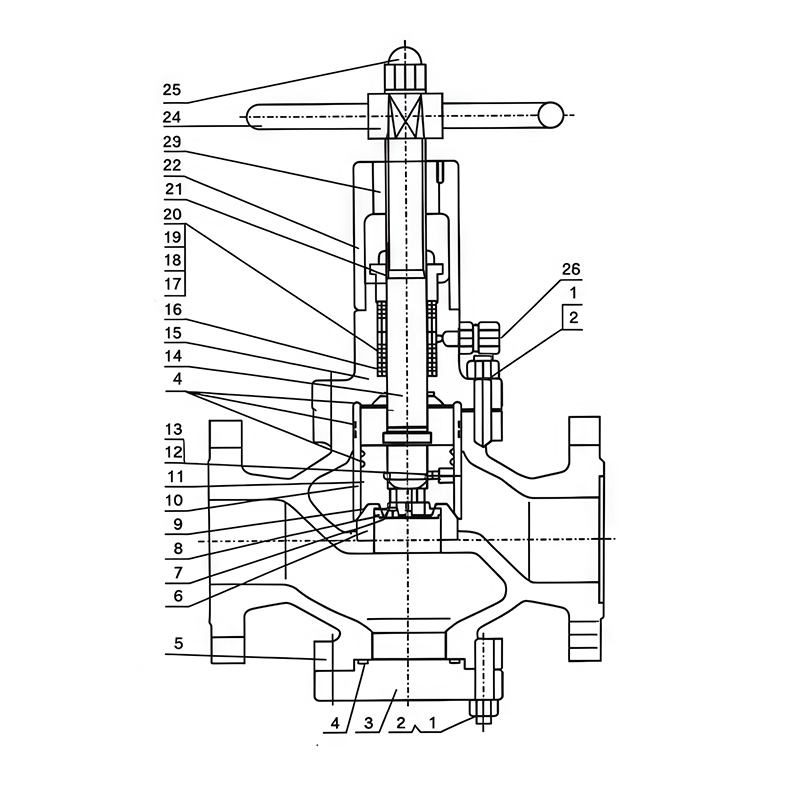
- Normally Closed State: The hard seal of the valve plug presses against the valve seat ledge to form a primary hard seal. Meanwhile, the soft seal embedded on the valve plug tightly contacts the valve seat end face to form a secondary seal. The dual-seal structure ensures zero leakage of the valve. Balance holes machined on the valve plug reduce the acting force applied to the plug during opening and closing, resulting in low operating torque.
- · · Pressure Buffering State: When the bottom end of the valve plug lifts off the valve seat sealing surface, the bottom end face approaches the lower edge of the slots on the cage sleeve. A seal is formed between the valve plug and the inner diameter of the cage sleeve instead of direct blowdown depressurization, so as to achieve pressure buffering.
- · · Throttling State: As the valve plug sealing surface departs from the valve seat and the valve opens further, the small plug forms the first-stage throttling. After pressure buffering and primary throttling, high-velocity fluid flows toward the window passage formed between the plug bottom and the cage sleeve slots for secondary throttling. The window edges of the cage serve as throttling surfaces. When high-pressure medium scours the throttling passage, vortexes generated at the plug bottom due to flow direction change mitigate direct medium scouring on the plug and valve seat sealing surface. In addition, the tapered plug sealing surface can blow away contaminants on the valve seat, protecting the sealing face and extending service life.
- · · Fully Open State: When the valve plug is fully lifted, the valve operates under full blowdown condition with low flow resistance, shortening venting time and improving blowdown efficiency.

Flow Characteristics
When this valve is used as a throttle valve, it provides obvious flow regulation performance. The flow characteristic curve is flat during low-flow regulation (it can also be designed for a flat curve during high-flow regulation), enabling easy flow control.
Main Component Materials
| No. | Part Name | Material | No. | Part Name | Material |
|---|---|---|---|---|---|
| 1 | Stud Bolt | 35CrMo | 14 | Valve Stem | 2Cr13 |
| 2 | Nut | 36 | 15 | Valve Bonnet | 25 |
| 3 | Bottom Cover | 20 | 16 | Lower Gland Washer | 1Cr13 |
| 4 | O-Ring | NBR | 17 | Middle Packing | PTFE |
| 5 | Valve Body | WCB | 18 | Middle Packing | NBR |
| 6 | Valve Seat | 20+Ni45 | 19 | Upper Gland Washer | 1Cr13 |
| 7 | Hexagon Socket Head Cap Screw | 35 | 20 | Baffle Ring | PTFE |
| 8 | Pressure Plate | 20 | 21 | Gland Flange | 45 |
| 9 | Sealing Ring | NBR | 22 | Bracket | WCB |
| 10 | Core Sleeve | 20+ENP | 23 | Stem Nut | ZQAL9-4 |
| 11 | Valve Disc | 2Cr13+Ni60 | 24 | Handwheel | 20 |
| 12 | Steel Ball | GCr15 | 25 | Nut | 35 |
| 13 | O-Ring | NBR | 26 | Grease Fitting | 25 + Zinc Plated (Assembly) |
Main Overall Dimensions
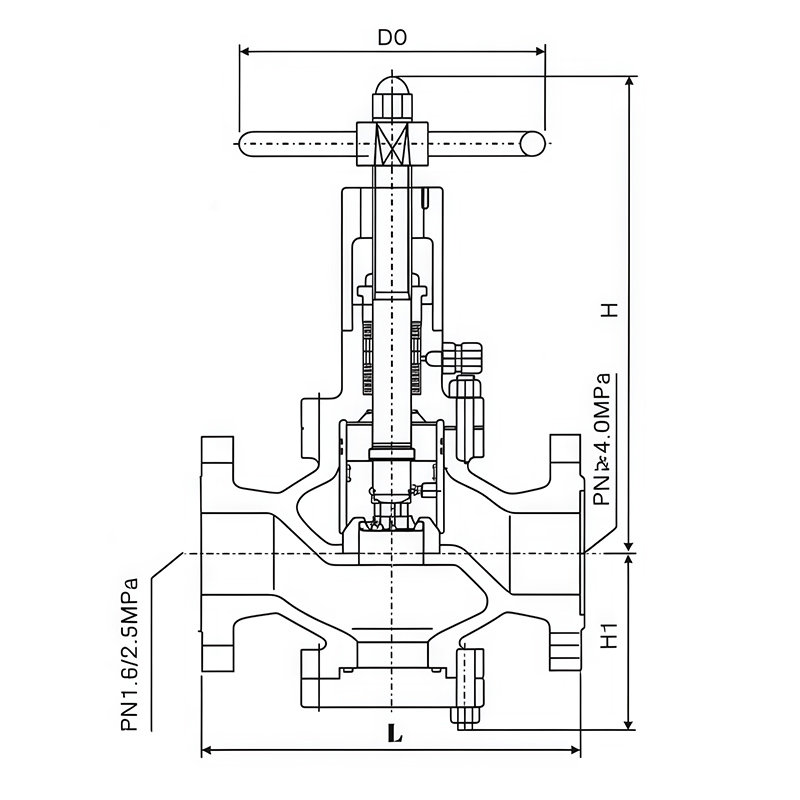
Model: (K)FJ41YPN 1.6, 2.5, 4.0MPa Unit: mm
| Nominal Pressure MPa | Nominal Diameter | Dimensions | |||
|---|---|---|---|---|---|
| L | H | H1 | D0 | ||
| 1.6 | 25 | 216 | 243 | 86 | 180 |
| 40 | 230 | 265 | 108 | 250 | |
| 50 | 230 | 346 | 115 | 250 | |
| 80 | 310 | 409 | 146 | 300 | |
| 100 | 350 | 433 | 163 | 300 | |
| 150 | 480 | 521 | 202 | 350 | |
| 200 | 600 | 594 | 292 | 350 | |
| 250 | 730 | 621 | 355 | 400 | |
| 2.5 | 25 | 216 | 243 | 86 | 180 |
| 40 | 230 | 265 | 108 | 250 | |
| 50 | 230 | 346 | 115 | 250 | |
| 2.5 | 80 | 310 | 409 | 146 | 300 |
| 100 | 350 | 433 | 163 | 300 | |
| 150 | 480 | 521 | 202 | 350 | |
| 200 | 600 | 594 | 292 | 350 | |
| 250 | 730 | 621 | 355 | 400 | |
| 4.0 | 25 | 216 | 243 | 86 | 180 |
| 40 | 230 | 265 | 108 | 250 | |
| 50 | 230 | 346 | 115 | 250 | |
| 80 | 310 | 409 | 146 | 300 | |
| 100 | 350 | 433 | 163 | 300 | |
| 150 | 480 | 521 | 202 | 350 | |
| 200 | 600 | 594 | 292 | 350 | |
| 250 | 730 | 621 | 355 | 400 | |
Main Overall Dimensions
Model: (K)FJ41Y, PN6.4, 10.0, 16.0MPa Unit: mm
| Nominal Pressure MPa | Nominal Diameter | Dimensions | |||
|---|---|---|---|---|---|
| L | H | H1 | D0 | ||
| 6.4 | 25 | 216 | 243 | 86 | 180 |
| 40 | 230 | 265 | 108 | 250 | |
| 50 | 230 | 346 | 115 | 250 | |
| 80 | 310 | 409 | 146 | 300 | |
| 100 | 350 | 433 | 163 | 300 | |
| 150 | 480 | 521 | 202 | 350 | |
| 6.4 | 200 | 600 | 594 | 292 | 350 |
| 250 | 730 | 621 | 355 | 400 | |
| 10.0 | 25 | 230 | 245 | 78 | 200 |
| 40 | 260 | 265 | 106 | 250 | |
| 50 | 300 | 287 | 110 | 300 | |
| 80 | 380 | 409 | 162 | 350 | |
| 100 | 430 | 433 | 169 | 350 | |
| 150 | 559 | 631 | 225 | 400 | |
| 200 | 660 | 709 | 321 | 500 | |
| 250 | 787 | 817 | 399 | 500 | |
| 16.0 | 25 | 230 | 215 | 78 | 200 |
| 40 | 260 | 265 | 105 | 250 | |
| 50 | 300 | 237 | 110 | 300 | |
| 80 | 390 | 414 | 165 | 350 | |
| 100 | 450 | 440 | 175 | 350 | |